

How to Choose the Right Luxury Skincare
Our Top Picks
Affiliate disclosure: if you buy through these links, we may earn a commission at no extra cost to you.

The luxury skincare market is drowning in hype. Walk into any high-end retailer and you'll find serums priced at $200 per ounce that contain less active ingredient than a drugstore alternative. The difference between genuinely effective luxury skincare and overpriced marketing comes down to one thing: understanding what you're actually buying. Ingredient concentration, formulation stability, and dermatological backing matter infinitely more than brand prestige or packaging design.
I've spent fifteen years evaluating skincare formulations, and I can tell you this: luxury doesn't mean expensive. It means intentional. It means a brand has invested in bioavailable actives, stabilized delivery systems, and clinical backing—not just pretty bottles. This guide will teach you how to decode luxury skincare labels, identify genuinely effective products, and avoid the traps that keep people throwing thousands at mediocre formulas.
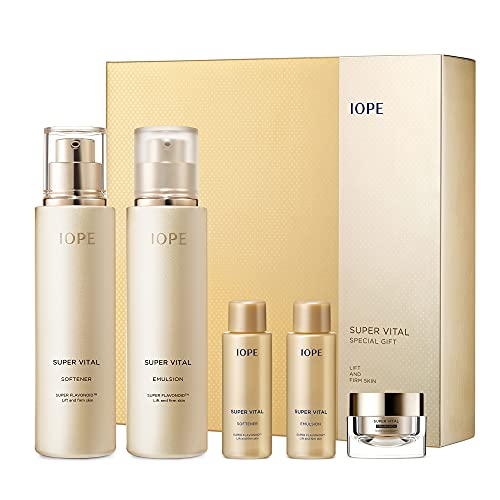
IOPE Super Vital Skin Care Set - Luxury Korean Skincare Gift Set for Anti Aging, Including Face Toner, Lotion and Moisturizer for Wrinkle Care - Facial Care Kit for All Skin, for Hydration & Lifting
$149.0Check Price
Table of Contents
Understand Active Ingredient Concentration
This is where most luxury skincare consumers fail. A retinol cream advertised as "advanced anti-aging" might contain 0.3% retinol—barely enough to trigger visible results. Clinical studies show that retinol concentrations of 0.5% to 1% are what actually drive measurable improvements in fine lines and skin texture. Anything below 0.3% is cosmetic window dressing.
The same logic applies across all categories. Vitamin C serums need a minimum of 10-15% L-ascorbic acid at a pH below 3.5 to penetrate the skin barrier. Niacinamide requires 4-5% to impact pore size and sebum production. Most luxury brands don't disclose these percentages—a major red flag. When a brand won't tell you their active concentration, they're betting you won't ask.
Premium moisturizers should contain ceramides (ideally 3%, 6, or 9 in the correct ratios), hyaluronic acid at meaningful concentrations, and peptides or growth factors if anti-aging claims are made. High-end sunscreen should be SPF 50+ with at least 7-10% zinc oxide or 7.5% titanium dioxide if mineral, or stabilized UV filters if chemical. Request specification sheets before purchasing—any legitimate luxury brand will provide them.
Know Your Skin Concerns Before You Shop
Luxury skincare marketing thrives on confusion. Brands create elaborate "systems" designed to make you feel like you need eight products when three would actually work. Before spending a single dollar, diagnose your actual concerns—not the ones marketing has convinced you that you have.
Are you genuinely dealing with fine lines, or is your skin dehydrated? Dehydration creates the appearance of fine lines within hours; real photoaging takes years to develop and requires different actives. Do you have active breakouts, or post-inflammatory hyperpigmentation? Acne-prone skin needs salicylic acid or azelaic acid, not vitamin C. Is your concern sensitivity, redness, or actual rosacea? These require completely different approaches—and many "luxury" serums designed for rosacea actually contain irritating essential oils that exacerbate the condition.
Get honest. Take reference photos in natural light. Consider consulting a dermatologist, not an aesthetician at a luxury counter—they have a financial incentive to sell you more. Identify 1-2 primary concerns maximum. The most effective luxury skincare routines are focused, not scattered.
Decode the Ingredient Hierarchy
Luxury brands love to lead marketing with their most impressive-sounding ingredients. A vitamin C serum might be marketed as a "potent brightening complex" when vitamin C appears as the eighth ingredient—beneath silicones and preservatives. The order matters absolutely.
The INCI list is legally required to display ingredients in descending order of concentration. Water (aqua) is almost always first in serums and creams. Look at what appears in positions 2-5; these are your actual active players. A "hyaluronic acid serum" where hyaluronic acid appears as ingredient #7 is mostly humectant hype. A "luxury retinol cream" where retinol is position #6 and dimethicone appears at #3 is primarily a silicone emollient, not a serious anti-aging treatment.
Pay attention to stabilizing agents and delivery systems too. Vitamin C becomes oxidized and useless if not properly stabilized. Look for ascorbyl tetraisopalmitate or ethyl ascorbic acid as alternatives if L-ascorbic acid isn't present—they're slightly less potent but much more stable and still effective. Retinol should be encapsulated or stabilized; if it's exposed to light and air, it degrades rapidly. Premium formulations address these issues; budget luxury often doesn't.
Evaluate Product Architecture and Stability
A genuinely luxury formula is one that's been engineered to deliver actives effectively. This requires thoughtful architecture. A vitamin C serum at pH 3.2 in an opaque, airless pump is premium. The same serum in a clear glass bottle with a dropper will oxidize within weeks and become worthless—but it looks more elegant on the shelf.
Retinol stability matters enormously. Bakuchiol is a gentler retinol alternative, but it's volatile and degrades quickly. High-end retinol formulas are often encapsulated in liposomes or other delivery vehicles that protect the active until it reaches your skin. Budget luxury skips this step. The result: you're paying for degraded actives that won't produce results. Luxury face masks are particularly vulnerable here—if a mask sits open in a jar for weeks, its active ingredients (peptides, antioxidants, enzymes) destabilize.
Premium moisturizers and sunscreens should have texture that's elegant but functional. A $300 sunscreen that feels heavy and greasy on skin defeats its own purpose—you won't use it consistently, and broad-spectrum protection requires daily application. The best luxury sunscreens use advanced silicone technology or newer UV filters that feel weightless while still providing full protection. Similarly, luxury beauty sets should be curated around complementary actives that actually work together, not thrown together for packaging appeal.
Calculate True Cost Per Active Ingredient
A $250 serum sounds expensive. A $250 serum containing 20% niacinamide, 5% hyaluronic acid, and peptides in an airless pump that lasts six months is actually reasonable. The same $250 serum that's 80% water, 15% silicones, and contains actives at 1% concentrations is price gouging.
The math is simple. A 30ml serum with 15% active ingredient concentration contains 4.5ml of actual active. If that serum costs $180, you're paying $40 per ml of active ingredient. Compare that to a $65 luxury serum from a dermatologist-recommended brand with 10% active concentration (3ml in 30ml)—you're paying $21.67 per ml of active. The latter is better value, even though it costs less.
Premium moisturizers typically range from $80-$200 for 50ml. Luxury anti-aging moisturizers should justify their price through ceramide complexity, peptide concentration, or inclusion of proven anti-aging actives like retinol or resveratrol. High-end sunscreen, paradoxically, should not be dramatically more expensive than mid-range options—UV filters are regulated commodities. If a luxury sunscreen costs triple what a dermatologist-recommended alternative costs, you're paying for brand prestige, not better sun protection. Luxury beauty sets offer modest savings—typically 10-15%—when compared to buying products individually, but only if every product in the set addresses your actual concerns.
Build a Purposeful Routine, Not a Collection
Luxury skincare marketing wants you to believe that more products equals better skin. This is fundamentally false. Skin barrier compromise, irritation, and ingredient interactions are the real risks of overcomplicated routines. The most effective luxury skincare routines contain 3-5 products maximum, each with a specific, non-redundant purpose.
A scientifically sound anti-aging routine might look like: a gentle cleanser, a targeted active serum (retinol, vitamin C, or niacinamide—choose one), a premium moisturizer with ceramides and peptides, and a high-SPF sunscreen. That's four products. A luxury face mask used once weekly as an additional treatment is reasonable; a collection of seven masks for "different needs" is not. Dermatologist-recommended skincare routines are built this way because dermatologists understand that active ingredients need stability, penetration time, and recovery periods—stacking ten products sabotages all three.
Introduce one new product every two weeks to assess tolerance and efficacy. Give retinol, vitamin C, and other active serums a minimum of four weeks before deciding if they're working—skin needs time to acclimate and cell turnover to reveal results. Luxury brands often recommend using their entire line; ignore this advice. Use what works, skip what doesn't, and never feel obligated to complete a set simply because it's packaged together.
Frequently Asked Questions
Is luxury skincare actually better than mid-range alternatives?
Not inherently. Some luxury brands deliver exceptional formulations; others are pure marketing. A $65 retinol cream from a dermatologist-recommended brand at 0.8% concentration may outperform a $200 luxury retinol cream at 0.3% concentration. The quality of formulation—active concentration, stability, delivery system—matters infinitely more than price point
🛒 Relevant Products for This Topic
Affiliate disclosure: if you buy through these links, we may earn a commission at no extra cost to you.
IOPE Super Vital Skin Care Set - Luxury Korean Skincare Gift Set for Anti...
$149.0
View Product Details →Sooryehan Bon Extra Moisture Korean Skin Care Gift Set (13.01 Fl Oz) -...
$89.0
View Product Details →Sooryehan Hyobidam Fermented Eye Cream (0.84 fl oz) - Korean Skincare,...
$79.0
View Product Details →

