

best luxury sunscreens for summer sun protection and holiday glow in 2026
🏆 Top Picks at a Glance
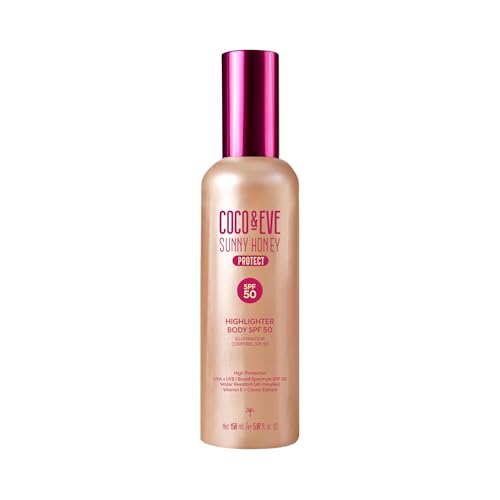 #1
#1
Best Overall
Coco & Eve Body Highlighter SPF 50 – Shimmer Sunscreen, Broad Spectrum Sun Protection, Lightweight Serum-Like Lotion with Pearlescent Minerals & Vitamin E for Hydrated & Glowing Skin, 5.07 Fl Oz
$38.0
Check Price → #2
#2
Runner Up
Coco & Eve Coconut Milk Body Sunscreen SPF 50 – Broad Spectrum UVA/UVB Sun Protection, Hydrating Daily Water-Based Lotion, Lightweight, Non-Greasy, Dermatologically Tested, 6.76 Fl Oz
$34.0
Check Price → #3
#3
Best Value
Naked Sundays SPF50 Golden Glow Body Sunscreen – Broad Spectrum UVA/UVB Protection, Glowy & Shimmering, Fragrance-Free, Firming, Non-Transfer SPF Lotion – 100ml
$19.99
Check Price →Our Top Picks
Affiliate disclosure: if you buy through these links, we may earn a commission at no extra cost to you.
Factors to Consider
Frequently Asked Questions
What SPF number do I actually need for luxury travel and outdoor summer activities?
SPF 50+ is the gold standard for extended outdoor exposure and vacation settings where reapplication may be inconsistent; the jump from SPF 30 to SPF 50+ only increases UVB protection by about 1-2%, but that marginal gain matters during midday sun exposure. For daily city use, SPF 30 is dermatologist-sufficient, but luxury formulations at SPF 50+ rarely feel heavier or more cosmetically inelegant than their lighter counterparts, so there's little reason not to upgrade.
Can I use a luxury sunscreen over my retinol or vitamin C serum without degrading either product?
Yes, but timing and layering order are critical—apply your actives to completely dry skin, wait 10-15 minutes for full absorption, then apply a hydrating toner or lightweight moisturizer before sunscreen. Avoid applying sunscreen directly over wet serums, which can cause pilling and create a barrier that reduces UV filter efficacy; the key is giving each layer time to set and creating a stable base for the sunscreen's protective film.
Do mineral sunscreens really leave a white cast, or have luxury formulations solved this?
Traditional mineral sunscreens do leave a white cast because zinc oxide and titanium dioxide are opaque pigments, but high-end luxury brands have tackled this through micronization, color-correcting pigments, and advanced suspension technology. Luxury mineral formulations now often include minimal white cast or none at all on most skin tones; however, deeper complexions may still notice some offset, so test before committing to a full-size purchase if this is a concern.
How often do I need to reapply sunscreen during a day of travel or beach time?
Every two hours if you're in direct sun, or immediately after swimming, sweating, or toweling off—this timeline applies to all SPF levels, whether drugstore or luxury. The most expensive sunscreen offers zero protection if it's applied once in the morning and forgotten; if reapplication is logistically difficult, consider a luxury powder sunscreen for touchups, or a spray formula for convenience (though sprays require rubbing in to ensure even coverage).
Is it worth buying a luxury face sunscreen separate from a body sunscreen?
Yes, if budget allows—facial sunscreens are formulated to layer gracefully over serums and makeup without disrupting makeup or causing congestion, while body sunscreens prioritize coverage area and durability. Facial formulations are also engineered with higher concentrations of skin-repairing actives and are tested for non-comedogenicity on acne-prone skin; using a lightweight facial sunscreen on your face ensures optimal texture and prevents the heaviness that can occur when body formulas are spread thin across delicate facial skin.
What's the difference between a luxury sunscreen and a "sun protection" moisturizer or serum with SPF?
SPF claims in serums or moisturizers are often marketing leverage—they're only valid if you apply the product in the thick, even layer used in SPF testing (roughly a quarter-teaspoon for the face), which most people don't do with serums or tinted moisturizers. A dedicated luxury sunscreen formulation is engineered with the UV filter concentration and stabilizer system needed to deliver the claimed SPF under real-world usage; relying on an SPF moisturizer as your sole sun protection usually provides inadequate coverage, especially if you're applying it sparingly for cosmetic reasons.
Can I wear luxury sunscreen under makeup, or should I apply it after foundation?
Apply sunscreen before foundation—this is the only way to ensure your UV filter layer is intact and uninterrupted. Wait 10-15 minutes for the sunscreen to fully set (especially important with mineral formulas), then apply primer and foundation as usual; layering sunscreen over makeup compromises the UV filter's protective film and can cause texture issues. A silicone-based sunscreen under makeup actually improves wear time by creating a smooth base for foundation adhesion.
Conclusion
Luxury sunscreen isn't a vanity purchase—it's the most cost-effective anti-aging investment you can make, preventing hyperpigmentation, texture changes, and accelerated photo-aging that would otherwise require corrective treatments down the line. Choose a formula that feels invisible on your skin, layers beautifully with your existing actives, and contains stabilizers or bonus actives that justify its premium price, then commit to consistent reapplication every two hours in strong sun.
For summer travel and holiday glow, prioritize a broad-spectrum SPF 50+ mineral or hybrid formulation that won't migrate into your eyes or interfere with makeup—your future complexion will thank you far more than any temporary bronzer or highlighter ever could.


